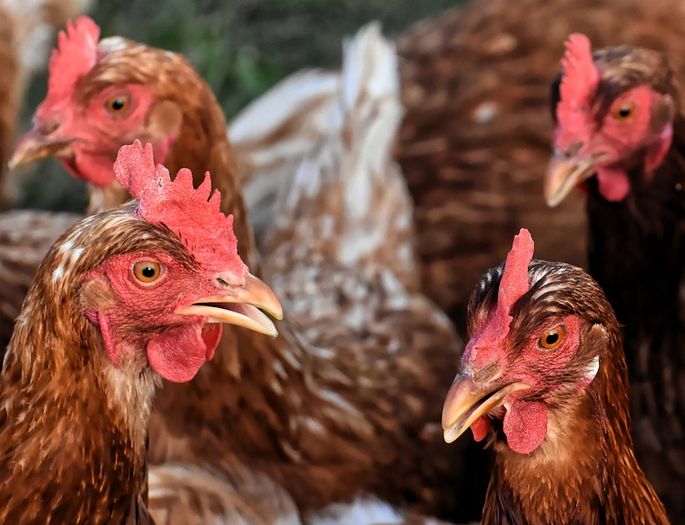
Researchers have discovered the H5N1 bird flu virus in poultry sold in Poland. They called the veterinary services and the State Sanitary Inspectorate to perform tests across the country. The study was carried out by Prof. Krzysztof Pyrć from the Jagiellonian University Małopolska Centre of Biotechnology, Dr hab. Maciej Grzybek from the Medical University of Gdańsk and Dr Łukasz Rąbalski from the University of Gdańsk.
The assessment following numerous cases of transmission of the H5N1 virus from birds to cats shows that one of the probable ways of the virus’ spread is through food. This claim is based on the sudden increase in detection of the virus in both indoor and outdoor cats as well as lack of cat-to-cat transmission outbreaks. Additionally, an analysis of the genome sequence of the virus taken from a cat has not demonstrated significant changes in comparison to reference sequences, pointing away from the emergence of a new strain that is more effective in infecting cats. Moreover, the similarity in genome sequences of the viral samples collected in various parts of Poland is very high, suggesting a single source of contagion. The researchers also say their interviews with cat owners indicated that raw meat might be that source.
‘To initially verify the hypothesis, we asked cat owners to send us samples of meat that their pets had eaten. We received five such samples and carried out molecular testing to check for the virus. It was present in one of them. Further analysis proved that the meat contained not only the virus’ genetic material, but also its infectious form – we were able to isolate it using cell cultures. Although we can’t exclude the possibility that the meat had been contaminated at a later time or that the owners had accidentally infected it with the virus present in their pets, we can’t also exclude raw meat as a source of contagion. It wouldn’t be a surprise, since a case of contamination of frozen duck meat with the H5N1 virus was reported as far back as 2007, leading to outbreaks of bird flu across Germany’, reads the information posted by Prof. Krzysztof Pyrć on his social media.
According to the virologist from the JU Małopolska Centre of Biotechnology, it is a valid reason to call to the veterinary services and the State Sanitary Inspectorate perform tests across Poland to check for the presence of the H5N1 virus. It is vital not only to the well-being of cats, but also because it is a threat to human health. Furthermore, the Polish poultry industry makes up for almost 20% of EU market, with an estimated value of more than three billion euro in exports.
Up until now, Poland faced three waves of bird flu. The disease was present in the country in 2007, from 2016 to 2017 and since 2019. The virus was responsible for putting down twenty million birds, leading to huge losses in agriculture.