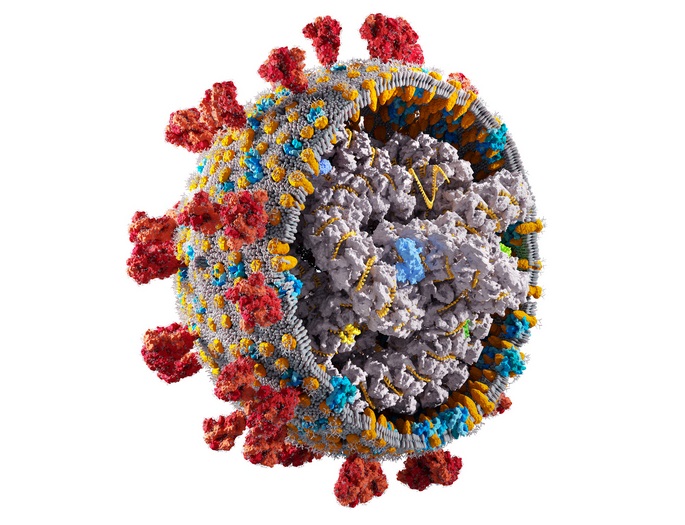
The international scientific community is constantly working on developing increasingly effective methods to combat pathogens. In an article published in the latest issue of Nature, researchers describe the discovery of inhibitors that could be used in future pandemics or epidemics caused by coronaviruses. Among its authors are researchers from the JU Małopolska Centre of Biotechnology: – Prof. Krzysztof Pyrć, Dr Katarzyna Owczarek, and Dr Aneta Zegar.
The SARS-CoV-2 pandemic has left a permanent mark on human history. Fortunately, in addition to vaccines, two different drugs have been developed to combat the coronavirus, mainly used for high-risk patients. However, these drugs are not perfect. The first one must be administered directly into the bloodstream, meaning that patients need to be treated in a hospital. The second can be taken orally but interferes with the dosage of many other medications. ‘There is a need for new SARS-CoV-2 drugs that can be taken as a simple pill and not interfere with other medications. Additionally, we need new coronavirus inhibitors to prepare for the potential emergence of future dangerous coronaviruses’, says Prof. Johan Neyts from KU Leuven.
This work results from close cooperation among scientists involved in the CARE project, of which Prof. Krzysztof Pyrć is the coordinator in Poland. The project is funded by the European Union and EFPIA—the European Federation of Pharmaceutical Industries and Associations. In preliminary studies, a team of chemists from the Centre for Drug Design and Discovery (CD3) and scientists from KU Leuven used a robotic platform to screen 350,000 molecules for their ability to inhibit the SARS-CoV-2 coronavirus. One tested substance proved particularly interesting, as it effectively blocked viral replication.
‘At this stage, our research teams joined forces within an international consortium. Our team participated in studying the mechanism of action of the discovered substance and analysing its potential use as a therapeutic during future pandemics. Interestingly, the molecule examined turned out to be unique - instead of blocking viral entry or replication, it acted at the late stages of virus replication, preventing the formation of new infectious particles. The findings were confirmed at the single-cell level and in advanced human 3D tissue models and animal models’, explains virologist Prof. Krzysztof Pyrć.
The study results were published in the paper An orally efficacious coronavirus assembly inhibitor that targets the viral M protein, which was published in the latest issue of Nature.