
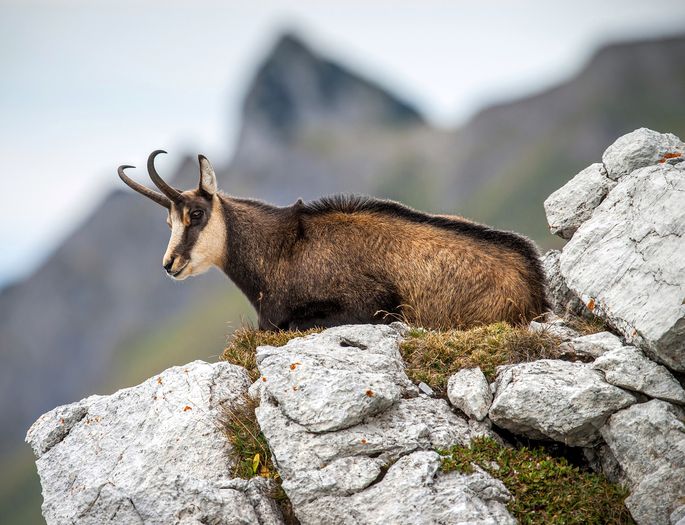
A decade ago, the population of chamois in the Tatra Mountains stood at 1,107. However, only 740 of these animals were counted during the spring census, making it one of the lowest figures in recent years. Is this decline the result of increased tourist activity, climate change or pressure from predators? Scholars at the Jagiellonian University have a long tradition of being involved in the efforts to protect this species, with their earliest attempts dating back to the 19th century.
The monitoring of chamois in the Tatra Mountains is the oldest example of cross-border nature monitoring in Europe. It has been conducted jointly since 1957 by the authorities of both Polish and Slovak Tatra National Park, with the former beginning the task on its own three years earlier. The animals are counted twice a year. The spring census focuses on the number of young born that year, while the autumn count estimates the total population.
This spring, a total of 740 chamois were recorded: 249 on the Polish side and 491 on the Slovak side. The proportion of young animals born this year was 12.7%. According to the Tatra National Park, this is a better result than in the past four years, although still not fully satisfactory. Researchers from the park emphasise that the census results should not be taken at face value, even though they are giving exact numbers: the margin of error is unknown, but may exceed 10%. It is also important to note that the division into 'Polish' and 'Slovak' chamois is entirely artificial, as many of them live near the border and cross it freely.
Comparing spring census results from previous years reveals a downward trend. In 2024, 793 chamois were counted, while the year before, it was 816. In 2020, the researchers counted 972 animals, and in 2018, their numbers were as high as 989.
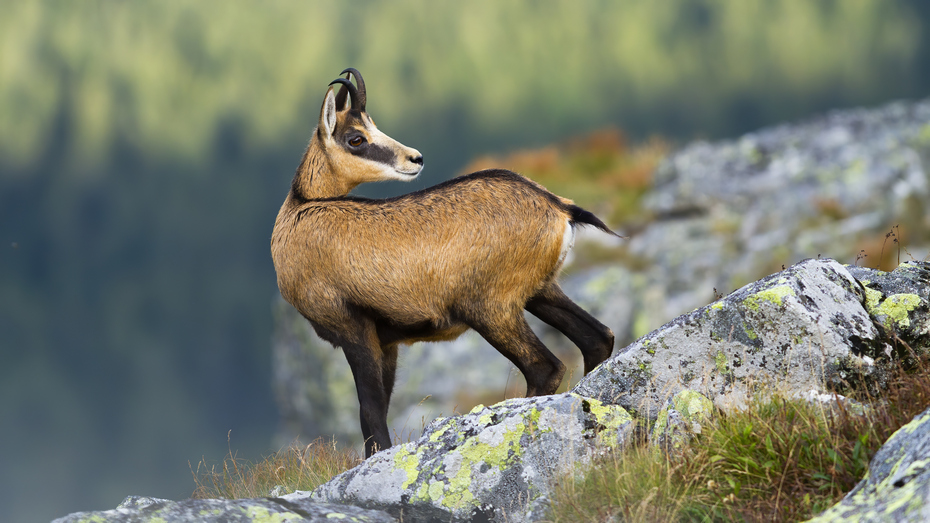 Historical data spanning over 150 years shows that the Tatra chamois population has faced extinction at least four times: in the mid-19th century, during both world wars and the post-war years, and - most recently - in the 1990s. During that last decline, no more than 220 individuals were observed across the entire Tatra Mountain range. While the causes of the first three declines were identified as human persecution and widespread high-altitude grazing of sheep and cattle, the reason for the most recent drop remains unclear. It may have been due to a combination of unfavourable factors or a weakening of the gene pool.
Today, several factors are recognised as potentially harmful to the Tatra chamois population, including climate change, an increase in predator numbers, and the development of new forms of mountain tourism often carried out outside designated areas. Environmental pollution (which lowers the animals’ natural resistance to disease) as well as -– to a lesser extent – poaching also play a role. Excessive tourist traffic is another contributing factor. Last year, the Polish Tatra National Park recorded 5.091 million visitors. However, according to park representatives, the chamois population appears to have stabilised following the decline observed after 2018.
'Stress caused by human presence is a significant factor in mortality, although some areas are strictly protected and, at least in principle, inaccessible to people. On the other hand, overcrowding within the population leads to faster and easier transmission of diseases and creates conditions for food competition. Climate change and unusual weather during reproduction and rearing of young may cause mortality in this age group. Predator numbers are increasing significantly, especially foxes, wolves, and, unfortunately, also domestic dogs, which are often seen in the Tatras. The mere presence of a predator can induce stress and physiological changes in the animal', said Dr hab. Izabela Wierzbowska, Prof. UJ from the JU Institute of Environmental Sciences.
Despite these natural limiting factors, the chamois has survived in the Tatra Mountains for thousands of years. It is a relict species. During the Ice Age, it was widespread across the tundra regions of Europe, and its bones have been found in caves near Ojców. The earliest traces of chamois presence date back to the end of the European Pleistocene. Advancing glaciers from northern Europe and the Alps pushed the animals from mountain peaks into lower areas. Several thousand years later, as the glaciers receded, and the encroaching forest vegetation caused a fragmentation of the mountain ranges, creating habitats for the chamois. This isolation led to the formation of island populations in the mountains of Central and Southern Europe, as well as Asia Minor and the Caucasus, where ten subspecies have been identified. One of them is the Tatra chamois – Rupicapra rupicapra tatrica – which belongs to the subfamiliy of goat-antelopes and is found only the Tatra Mountains, the northernmost range of all chamois populations.
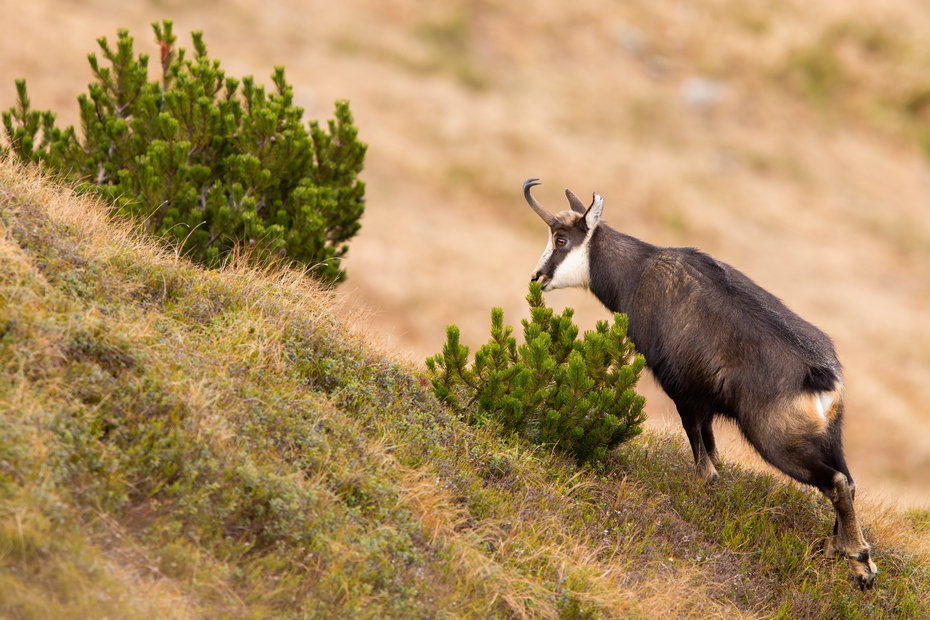 Chamois are typical mountain animals. In the Tatras, their vertical distribution ranges from 1,350 metres above sea level to the highest peaks. Most often, however, they are found between 1,700 and 2,200 metres above sea level, amongst dwarf pines, alpine meadows and rocky outcrops. Their spatial distribution depends mainly on the season, weather conditions and food availability. In the summer, they are most often seen in alpine meadows and rocky areas on northern slopes, while in the winter they move to dwarf pine zones on southern slopes.
In the past, chamois were heavily poached by residents of the Podtatrze region. Literature contains many accounts of chamois hunters, including Jan Budz, a poacher from Jurgów who reportedly killed over 300 chamois by 1862. Hunting was done primarily for profit, and the usefulness of nearly all parts of the chamois carcass made it the most sought-after game in the Tatra Mountains. Stuffed heads adorned the rooms of nobles, horns were used for walking stick handles or wall pegs, tanned hides were made into trousers and gloves, and the meat was seen as an exquisite treat.
'In those days, the male chamois’ mane was also highly prized in Podhale. The locals used it to make kistki, the decorative parts of hats worn by middle-aged and older men, mainly married ones. Today, feathers, mainly those of eagles, are used as a symbol of bachelorhood and attached to hats. During the oczepiny – the main ritual of the Polish highlanders' wedding – the groom removes the feather from his hat and gives it to his bride. However, the kistki are especially cherished, particularly those inherited from fathers, uncles and grandfathers', said Prof. Stanisława Trebunia-Staszel from the JU Institute of Ethnology and Cultural Anthropology.
By the mid-19th century, due to poaching, the Tatra chamois was already considered endangered. Former JU Rector Prof. Franciszek Ziejka, in his paper Narodziny legendy Zakopanego [The birth of Zakopane's legend] recalled Prof. Ludwik Zejszner from the JU Department of Mineralogy, who was one of the pioneers of nature conservation in the Tatra Mountains. He advocated for the protection of chamois and marmots. In 1849, based on hunters’ reports, Prof. Zejszner wrote: 'The number of wild goats is not large; hunters familiar with the area assured me that there are no more than 100 in the entire Tatras, perhaps even fewer. Their numbers are steadily decreasing, as many people hunt them, and only the harsh climate and their unmatched agility mainly protect them from extinction. It is highly probable that unless the government intervenes and restricts hunting, as it does in the Białowieża Forest with bison, wild goats will disappear from the Tatras'.
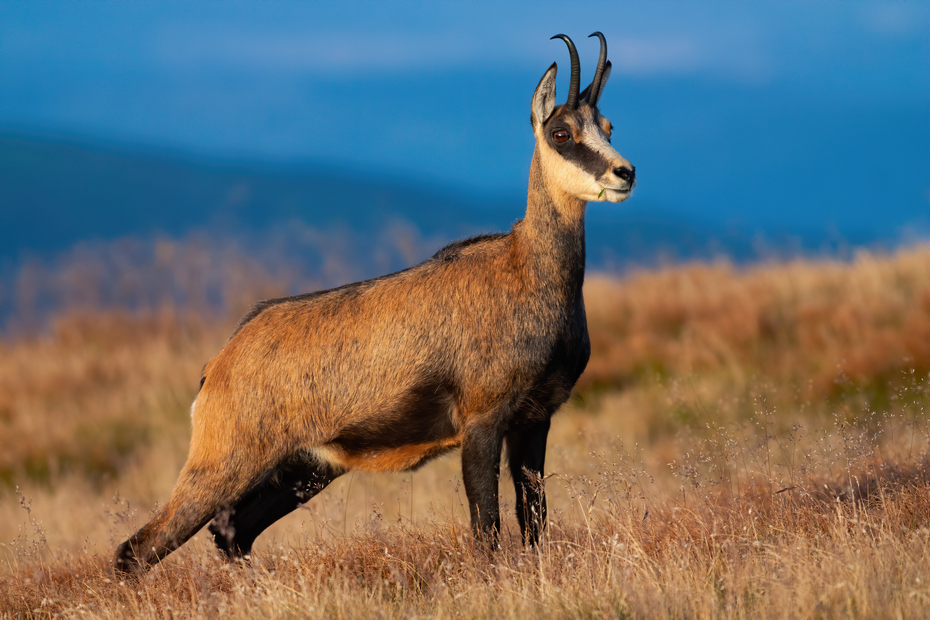 Among the pioneers of scientific research in the Tatras was Maksymilian Siła Nowicki, the first Polish professor of zoology at the Jagiellonian University. He became one of the most ardent defenders of Tatra nature, frequently writing articles for Polish and German press, arguing for the defence of chamois and marmots. His close collaborator was Rev. Eugeniusz Janota, a teacher at the St Anne’s Gymnasium (High School) in Kraków and later a professor at Lviv University. Their long-standing efforts led to the issue of chamois and marmot protection being brought before the Galician Parliament in Lviv, which in 1868 passed the world’s first law protecting these animals.
During the times when subsistence economy was prevalent, highlanders would go into the mountains to hunt game, including chamois. It is important to remember that certain rules applied. Wojciech Gąsienica-Byrcyn, former director of the Tatra National Park, wrote beautifully and evocatively about the relationship between humans and these animals. He noted that chamois should not be hunted until autumn, so they could feed and raise their young. 'Chamois appear in many highlander songs, which can be seen as poignant testimonies of human interaction with nature. As we know, in traditional communities, human existence was closely intertwined with nature and dependent on it. To survive, people observed nature, engaged with it, adapted to its laws and struggled with its forces', saidProf. Stanisława Trebunia-Staszel.
Today, many place names in the Tatra Mountains are associated with chamois, such as Kozi Wierch (Goat's Peak), Kozia Strażnica (Goat's Watchtower), Kozia Dolinka (Goat's Valley), Kozia Przełęcz (Goat's Pass) and others. The species is also a symbol of both the Polish and Slovak national parks and appears on the badges of Tatra mountain guides. Chamois are also featured in folk tales and stories, songs and ballads, as well as in glass paintings, sculptures and reliefs.


